










A Lithuanian blogger, Mantas Brazdžionis, likes to find undiscovered places across the country. From an interwar-era prison to an abandoned chapel and a cave for young men dodging Soviet army conscription – he has seen it all.
Brazdžionis has agreed to share some of the top things he has seen on his travels.
1. Lyduvėnai Bridge (Raseiniai District)
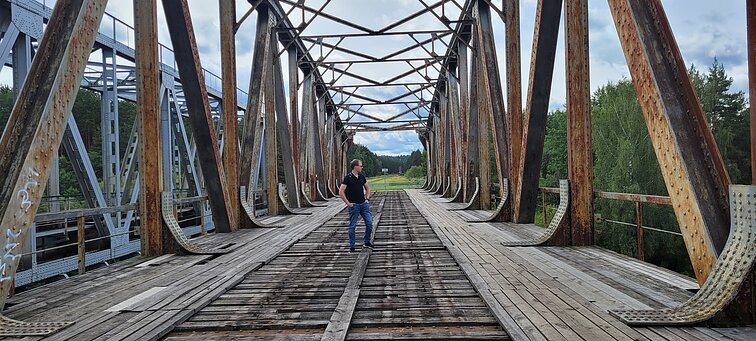
The longest and tallest bridge in Lithuania was only opened to the public last year. “There is also a pedestrian path that winds under the bridge and can be walked with a guide. To make it safe, visitors are given helmets and vests, while a guide explains the history of the bridge,” said Brazdžionis.

2. Love Island (Druskininkai)
Visitors to Druskininkai are familiar with the cycling and hiking trails along the Nemunas River. But Love Island is another less-visited place, especially to watch sunsets.
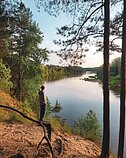
“You cannot get to Love Island in the middle of the river, but there used to be a bridge in the old days, which made it a popular date spot. Now, the island can be admired from a viewing platform at the bend of the river. The views are truly spectacular,” said Brazdžionis.

3. Čiobiškis Cave (Širvintos District)
According to the blogger, it is not easy to get to the only real cave in Lithuania. The untouched work of nature not only offers beautiful views but also interesting legends.
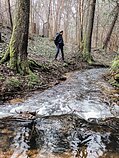
“Since the cave is located above a stream, on top of a slope, you have to be careful when hiking up to it. However, for those of us who are used to Lithuanian plains landscapes, the view here is truly spectacular.
By the way, Čiobiškis Cave is also surrounded by various legends. It is said that thousands of years ago it was inhabited by several families of cavemen and during the Soviet era, Lithuanian youths used to hide here to escape from the draft,” said Brazdžionis.
4. Three bridges (Vilnius and Švenčionys districts)
If you want to take exceptional photos, Brazdžionis recommends going to the intersection of Vilnius and Švenčionys districts. The Neris and Žeimena rivers intersect there and they are connected by three different bridges.
“One train bridge was built by the Germans – it’s no longer in use, but it’s still standing almost intact. There is a newer bridge next to it, which still carries trains to the eastern side of Lithuania. You will also find a suspension footbridge. All the bridges offer different panoramas of the intersecting rivers, and this place is a favourite with photographers and wedding guests,” said Brazdžionis.
It takes just half an hour to reach this place from Vilnius by car. Look for the Santakos Pedestrian Bridge for easy access.

5. Abandoned chapel (Ukmergė district)
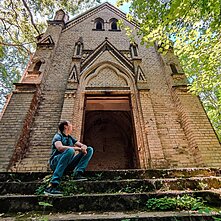
This place is for the adventurous, according to the blogger. The chapel is located close to the village of Antakalnis near Ukmergė, just off the Vilnius-Panevėžys motorway. Although it is only a few hundred metres from the road, the chapel is not visible when driving.
You won’t be able to drive up to it either - you’ll have to trudge through fields and woods to get there. “But that’s the fun of it,” said Brazdžionis. He managed to reach the site only on his attempt, as the paths have long since been overtaken by nature.
“This place used to be the site of the Poklevskis-Kozels nobleman’s estate complex. Now, the only reminders of its existence are the avenue of trees leading to the main manor house and the old chapel, built more than a hundred years ago. It is quite small, and could probably accommodate only a few people.
The neo-gothic chapel, built by craftsmen from Latvia, was used for services and to celebrate Easter. Today, the yellow brick building is abandoned. However, it doesn’t have the uncomfortable feel of other abandoned places,” said Brazdžionis.
6. Kruonis gravitational hill (Kaišiadorys District)
“Near the town of Kruonis, we can find a unique place – there are only a few of them in the world,” the blogger said. Prepare to experience an optical illusion: you’ll think you’re driving up a hill but you’ll be actually going down.
“There’s a paved stretch of several hundred metres through the forest. Interestingly, there are no buildings or towers to guide you as you approach it. This creates an optical illusion: when you put the car in free gear, it looks like you’re going uphill when you’re actually going downhill. The experiment can also be done with a ball, for example. The feeling is really hard to explain,” said Brazdžionis.
7. Stream tunnel of Motertis (Alytus district)
Probably more than one person has walked on the Baltosios Rožės Bridge in Alytus – the highest pedestrian and cycle bridge in the country. Before it was also used for railway.
The tracks ran through remote and wooded areas. One of them – the 19th-century tunnel over 60 metres long, the Motertis Stream Tunnel – is still preserved today.
“During the Second World War, the tunnel was used to shelter locals from air raids. It is said that bats inhabit the tunnel today, although I have never seen them. The tunnel is more than three metres wide, but be careful: you will have to climb more than one slippery step,” said Brazdžionis.
8. Rūdninkai Dune (Šalčininkai District)
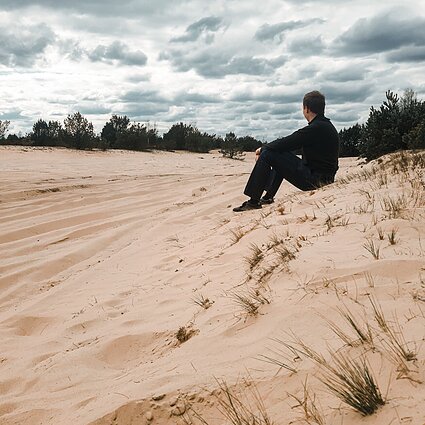
The Rūdnininkai Forest features stretches of seaside-like sandy stretches.
“In the old days, this place was a military training ground, and planes used to drop bombs here. They began to destroy the vegetation, and the greenery grew smaller and smaller until sandy fields were formed instead. When you arrive in the forest, there is white sand under your feet, so it feels like the Baltic Sea is somewhere over the hill,” said Brazdžionis.
Today, however, the Rūdnininkai Dune is protected by a barrier and can only be accessed with the permission of the military. Visitors are advised to call the number indicated by the barrier and ask to be allowed inside.
9. Vilsa waterfalls (Trakai District)
If you want to see the only natural waterfalls in Lithuania, head to Trakai District – the waterfalls are hidden in the forest near the village of Žemieji Semeniukai.
“It takes a while to get there and you have to wade through a dense but very cosy forest. The Vilsa stream is tiny, just five kilometres long. Over the years, it has naturally formed waterfalls, bigger and smaller. The biggest waterfall is about 1.5 metres high – you won’t find more natural waterfalls of this size in our country,” said Brazdžionis.
10. Abandoned Dimitravas Prison (Kretinga District)
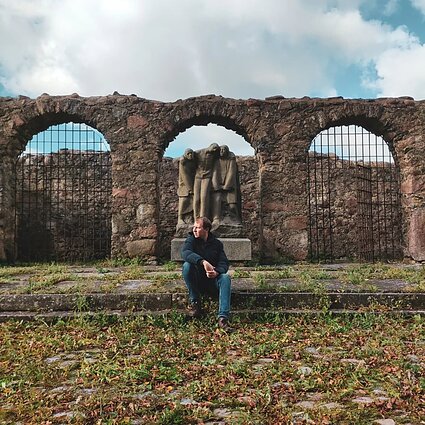
Dimitravas is a remote village in the depths of Žemaitija, hiding fascinating stories. According to Brazdžionis, on the initiative of the counts of Zubovai, a manor house was built there in the 19th century. During the interwar years, it was turned into a prison for forced labour. Criminals and political prisoners were housed there for some eight years, with up to 200 people interned there at a time.
“The former manor house is now tucked in between residential buildings. The building, although derelict, is truly unique: it is made of dark-coloured stones, with bars on the windows and a new sculpture next to it. It has a really interesting atmosphere,” said Brazdžionis.

Newsletter
Every Friday morning.